Bird Cage Setup: Everything About Size, Placement, and Essentials
The cage your bird lives in is the single physical environment that most affects their daily quality of life. I’ve walked into homes where birds were living in setups that were making them chronically stressed — too small, wrong bar spacing, inadequate perching, placed in drafts or isolation — and I’ve seen the transformation when those conditions were corrected. Getting the cage setup right isn’t a detail. It’s foundational.
Size: Bigger Than You Think
The first question most people ask about a bird cage is “what size do I need?” and the honest answer is always “bigger than the minimum.” Bird cage manufacturers and retailers have financial incentives to sell you the cheapest acceptable cage. The minimum guidelines I’m about to give you are just that — minimums, not ideals.
The universal principle: the bird should be able to fully extend both wings in all directions without touching the bars, and the cage should be wide enough for the bird to take several wingbeats from one side to the other. Horizontal flight space matters more than vertical height, because birds fly horizontally.
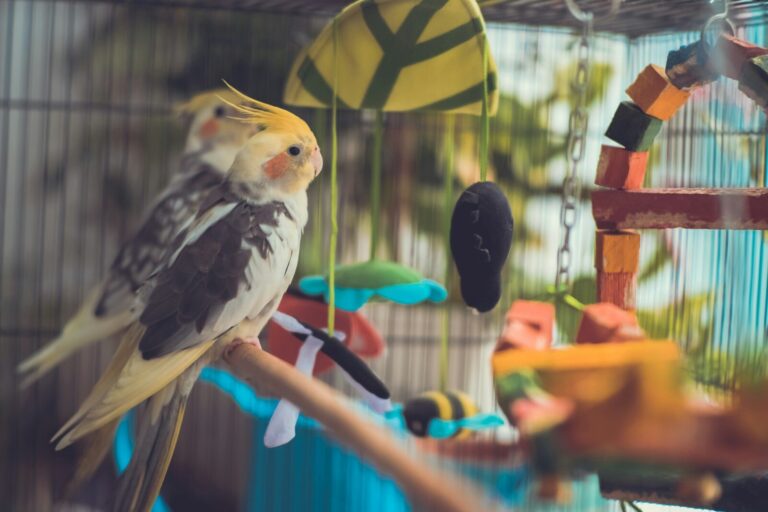
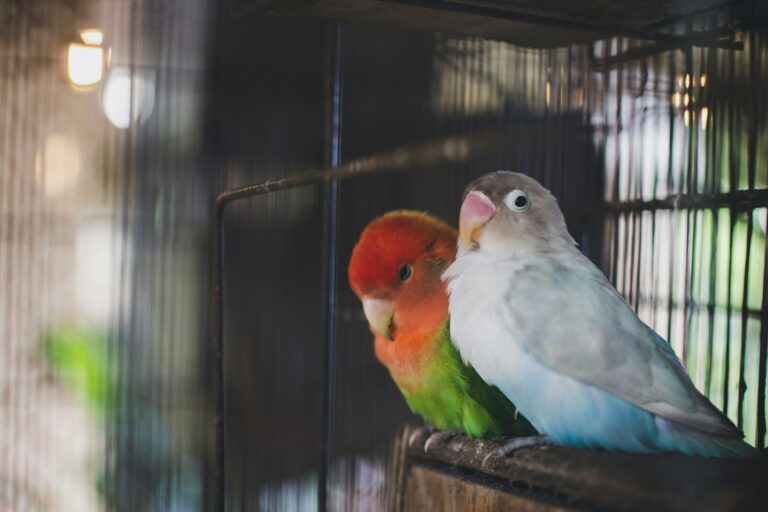
Species-specific minimums: Budgerigars and small finches — 30 inches wide minimum. Cockatiels — 24 inches wide by 18 deep by 24 tall minimum, preferably larger. Small conures and lovebirds — 24 wide by 24 deep by 30 tall minimum. Large conures and small Amazons — 36 wide by 24 deep by 36 tall minimum. African Greys and medium Amazons — 36 wide by 24 deep by 48 tall minimum. Large Amazons, cockatoos, large macaws — 48 wide by 36 deep by 60 tall minimum; floor-to-ceiling flight cages are ideal for these species.
Bar Spacing: Critical Safety
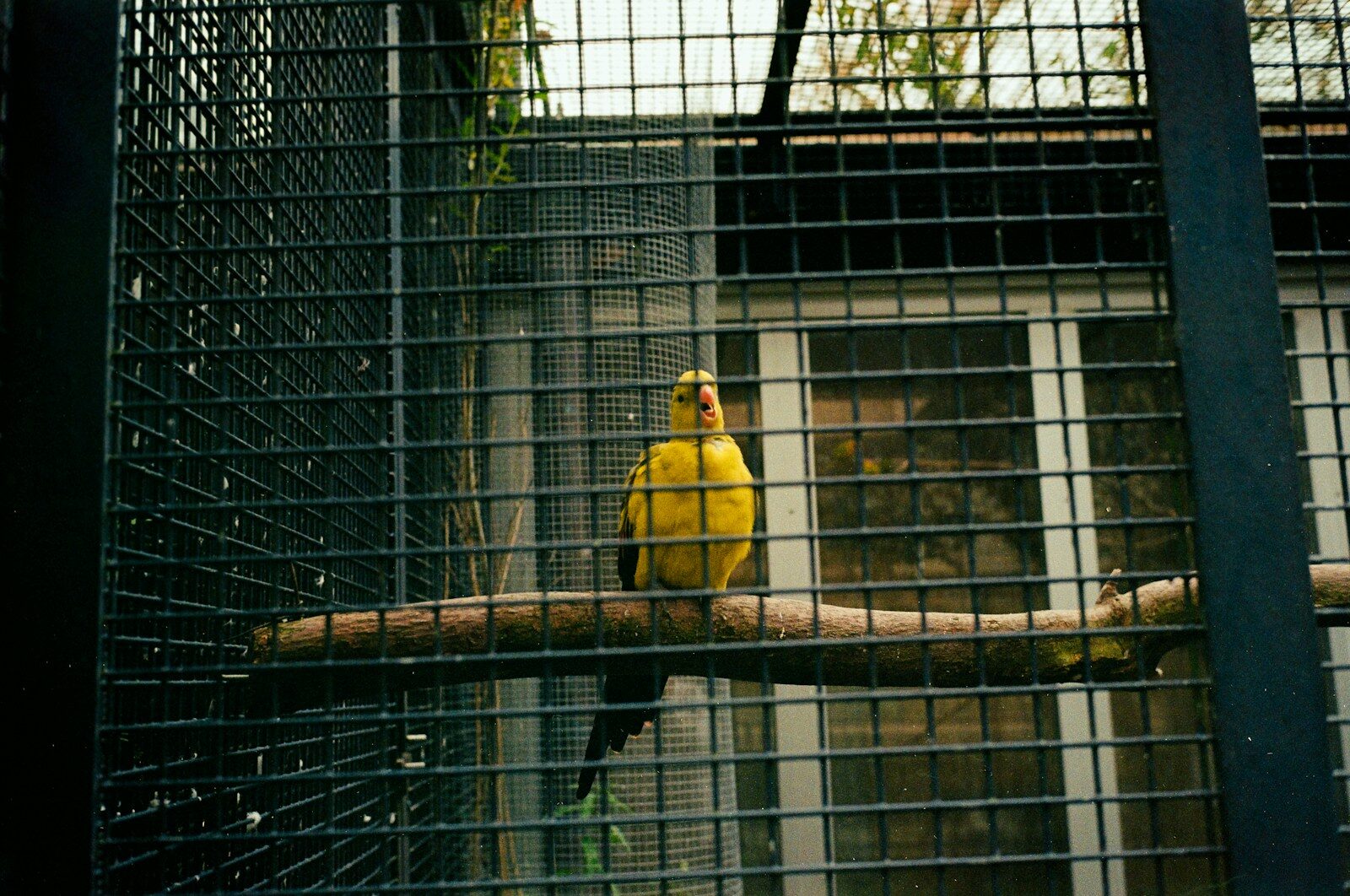
Incorrect bar spacing is a genuine injury and death risk. Too-wide spacing allows birds to escape or, worse, to get their head through bars and become trapped. Bar spacing by species: small finches and canaries — 3/8 to 1/2 inch. Budgies — 1/2 inch. Cockatiels and small conures — 1/2 to 5/8 inch. Medium parrots — 3/4 inch. Large parrots — 1 to 1.5 inches. When in doubt, err on the smaller spacing — a bird that can’t get its head through a bar cannot be trapped by one.
Bar Material and Coating
Stainless steel is the gold standard — non-toxic, durable, easy to clean, and resistant to the destructive chewing of larger parrots. Powder-coated steel is acceptable if the coating is intact, but chips are a concern — larger parrots who chew bars will eventually chip powder coating, which can be ingested. Zinc and lead are toxic to birds; avoid galvanized cages and cages with zinc hardware. Never use antique cages with lead paint.
Perch Selection: Often Underestimated
Perches may be the most underappreciated element of cage setup. A bird spends most of its life on perches, and the wrong perches cause foot problems — bumblefoot, arthritis, pressure sores — that affect quality of life and longevity. The standard plastic or uniform wooden dowel perch that comes with most cages is the worst option. Provide variety:
Natural wood branches: The best option for primary perching. Irregular diameter means the bird’s foot grip constantly varies, which prevents the muscle fatigue and pressure points that uniform perches cause. Use hardwood branches that haven’t been treated with pesticides or other chemicals. Apple, maple, willow, and eucalyptus are all safe choices. Avoid cherry, plum, and other stone fruit woods.
Rope perches: Flexible, comfortable for relaxed resting. Good sleeping perch option — the flexibility provides gentle grip accommodation. Inspect regularly for fraying that could trap toes.
Concrete or pumice perches: Excellent for nail conditioning, reducing the frequency of nail trims. Position as a secondary perch, not the main resting spot — the abrasive surface shouldn’t be where the bird spends most of its time.
Position perches at multiple heights to create distinct zones within the cage. Place a high perch — birds feel most secure at height — as the primary sleeping and resting location. Position perches so droppings don’t fall into food and water dishes. Don’t overcrowd the cage with perches that reduce flight space.
Food and Water Dishes
Provide separate dishes for dry food, fresh food, and water — not a single combined dish for everything. Stainless steel dishes are hygienic, durable, and non-toxic. Replace plastic dishes, which develop microscopic cracks that harbor bacteria. Position dishes so they’re accessible but not directly under perches where droppings can contaminate them. Wash dishes daily. Fresh food dishes must be cleaned and any uneaten perishables removed within two to four hours to prevent bacterial growth.
A water bottle attachment alongside a water dish ensures the bird always has clean water — many birds contaminate their water dish with food and droppings within hours of a change. Introduce water bottles carefully to ensure the bird understands how to use them before removing the dish backup.
Cage Placement: Environmental Factors
Where you put the cage matters as much as what the cage is. Key principles:
Against a wall: Open-space positioning feels exposed and insecure to a prey animal. A cage with at least one side against a wall provides a sense of security. Corner placement against two walls is ideal for nervous birds.
At eye level or slightly above: Being high enough to survey the room while not being at ceiling height. Birds placed too low feel vulnerable; birds at ceiling height may feel isolated from the household activity they need for stimulation.
In a social room: The living room or another room where family spends significant time allows the bird to be part of household activity. A bird isolated in a back bedroom experiences significant social deprivation.
Away from the kitchen: Non-stick cookware at high heat releases polytetrafluoroethylene (PTFE) fumes that are acutely fatal to birds within minutes. Even cooking oils and self-cleaning oven cycles produce fumes that can harm birds. The kitchen is not a safe room for bird cages.
Away from drafts: Drafts — from air conditioning vents, windows, exterior doors — cause respiratory illness in birds. Check the draft exposure of any placement before committing to it.
Away from direct sustained sunlight: Some indirect natural light is beneficial. Direct sustained sunlight without shade options can cause overheating. Provide the bird the option to move into shade.
Enrichment Inside the Cage
A bare cage with perches and food bowls is not sufficient. Birds need toys for mental stimulation, foraging, and physical activity. Rotate toys regularly — toys left in the cage permanently become invisible. Have a collection of three times as many toys as are in the cage at any time, rotating them weekly so everything stays novel. Include: shredding toys (paper, palm fronds, soft wood), foraging toys (food hidden inside puzzles), foot toys (items the bird can hold and manipulate), and noise-making toys (bells, rattles). Match toy size to bird size — small toys from which beads can be pulled are a choke hazard for small birds; large toys designed for macaws are inappropriate for cockatiels.
Cleaning Routine
Daily: change water, remove and replace cage liner paper, remove any uneaten fresh food. Weekly: disinfect food and water dishes, wipe down perches, clean cage bars. Monthly: full cage disinfection — remove all contents, clean with bird-safe disinfectant (diluted white vinegar works well and leaves no toxic residue), rinse thoroughly, dry completely before replacing bird. A clean environment prevents bacterial and fungal infections that are significant health risks for birds.