Lovebird Care and Bonding: What You Need to Know
Lovebirds have a reputation that’s simultaneously accurate and misleading. Yes, they’re small. Yes, they’re entertaining. No, they’re not simple beginner birds. In my experience, lovebirds are more often mismatched with owners than almost any other small species — people choose them for their beauty and compact size without understanding the level of engagement they demand and the behavioral complexity they carry. When the match is right, lovebirds are extraordinary companions. When it’s wrong, they become nippy, screaming, frustrated birds.
Species Overview
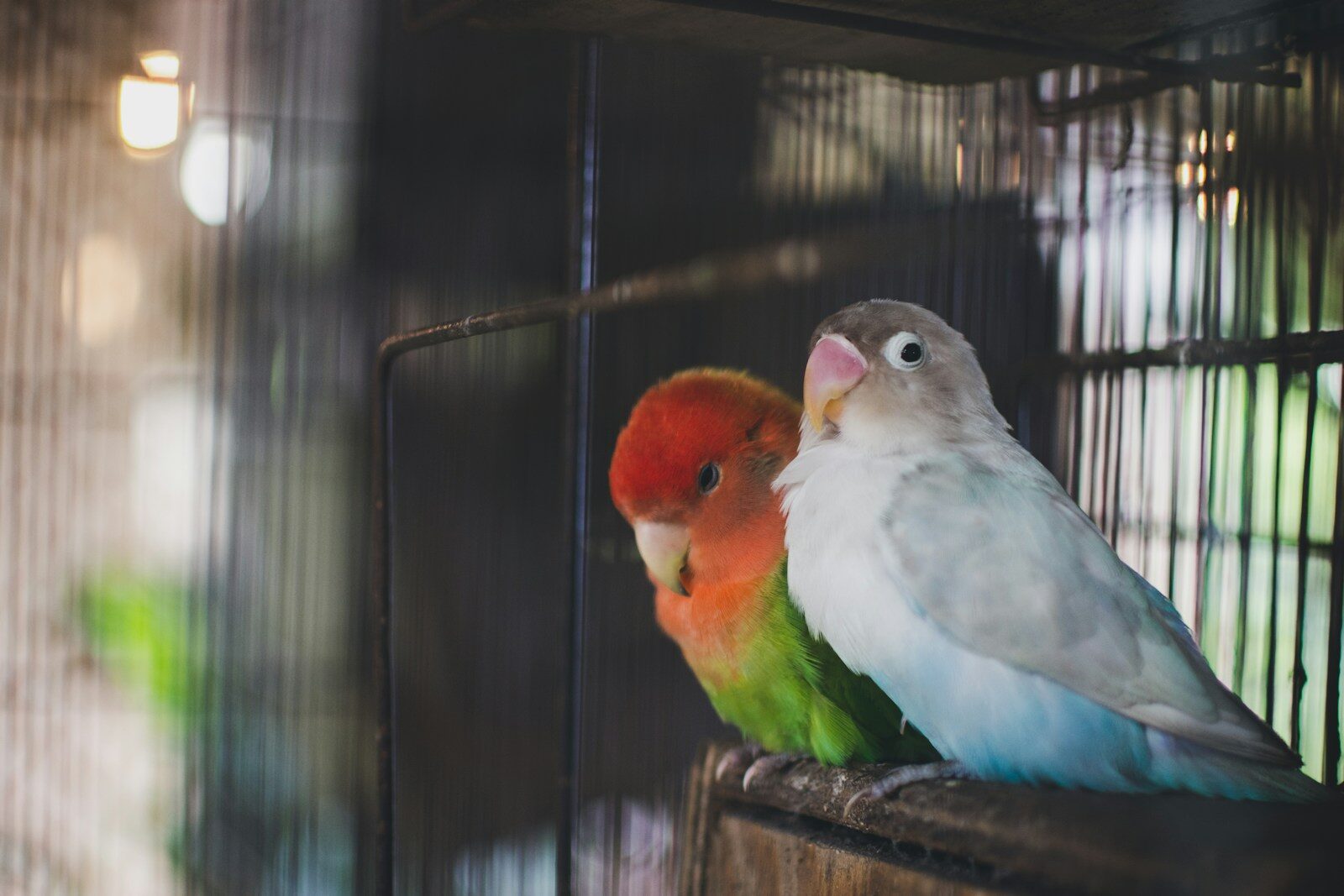
The most commonly kept lovebird species in aviculture: Peach-faced (Rosy-faced) lovebirds are the most popular, available in a wide range of color mutations, and among the most readily hand-tameable when raised appropriately. Fischer’s and Masked lovebirds are also commonly available. All species share the general care requirements described here, with minor variations in temperament — Peach-faced are generally considered more adaptable to handling, while Masked lovebirds can be somewhat more intense.
The Social Reality
The name “lovebird” comes from the species’ intense pair-bonding behavior — pairs spend hours in close physical contact, preen each other, feed each other, and are visibly distressed when separated. This is genuinely touching to observe. It also has an important implication for keeping lovebirds: a single lovebird kept without its social needs met requires substantial daily human interaction to substitute for the missing avian companion.
A single, well-socialized lovebird with 3+ hours of daily human engagement can thrive. A lovebird left alone for long working hours without adequate enrichment will develop behavioral problems — screaming, feather-destructive behavior, and increasingly difficult temperament. If your life genuinely can’t support that interaction level, keep a pair. A paired lovebird provides for its own social needs and is less demanding of the owner’s time. The common concern — that paired lovebirds ignore humans — is legitimate but manageable with consistent handling.
Housing
For a single lovebird: minimum 18 inches wide by 18 inches deep by 24 inches tall — and these birds need daily out-of-cage time in a safe space. For a pair: 24 inches wide by 24 deep by 30 tall minimum. Bar spacing: 1/2 inch. Lovebirds are destructive chewers and will chew wooden toys, perches, and cage furnishings enthusiastically — this is normal and provides valuable enrichment. Provide an abundance of safe chewable materials: willow branches, palm fronds, cork, soft wood toys. Lovebirds also enjoy nesting material even outside breeding season — providing strips of paper or palm frond for them to tuck into their rump feathers and carry around is entertaining and enriching.
Diet
High-quality pellets for small parrots as the foundation (50-60%), fresh vegetables daily, seeds in moderation as treats. Lovebirds have a particular fondness for millet — use it as a training reward rather than as a dietary staple. Sprouted seeds (seeds soaked and sprouted for 24-48 hours) are nutritionally superior to dry seeds and increase the fresh food component of the diet. Fresh water daily. Cuttlebone for calcium, particularly important for females who are prone to egg production.
Taming and Handling
A hand-raised lovebird from a reputable breeder is usually handleable from the start. An aviary or parent-raised lovebird requires systematic taming — the same approach described in the taming guide, with the acknowledgment that lovebirds’ nippiness during taming can be more significant than that of some other species. Their small beak is capable of a genuine, painful bite. Consistent, patient work using treat-based positive reinforcement — never punitive responses to biting — produces handleable lovebirds reliably over four to eight weeks.
Once tamed, lovebirds are typically bold, curious, and extremely entertaining out-of-cage companions. They follow their owners around, investigate everything, and often develop strong preferences for specific people, activities, and locations.
Health and Veterinary Care
Annual avian veterinary visits. Lovebirds are susceptible to psittacosis, which is particularly important to test for in new birds. Females are prone to chronic egg laying, which depletes calcium and can lead to egg binding — manage with appropriate calcium supplementation and, if chronic laying is a problem, consult an avian vet about hormonal management. Feather cysts (follicular cysts producing abnormal feather growth) occur in some lovebird lines — any unusual feather growth warrants veterinary examination. Average lifespan: 10-15 years with good care.