How to Introduce a New Bird to Your Home
The way the first days with a new bird go shapes the entire relationship that follows. I’ve seen birds who were labeled difficult or aggressive turn out to be completely manageable once the transition stress was properly handled — and I’ve seen birds who were sweet and well-adjusted at the breeder become defensive and difficult because the transition to a new home was handled too fast and too intrusively. Getting the introduction right isn’t just kind. It’s strategic.
Quarantine: Non-Negotiable for Multi-Bird Households
If you have other birds at home, any new bird must be quarantined for a minimum of 30 days — 45-60 is better. This means a completely separate room with no shared airspace, and ideally separate care equipment. Even a bird that appears healthy can be incubating infections or carrying diseases asymptomatically that would be devastating to your existing birds. Psittacosis, PBFD, Proventricular Dilatation Disease, and various bacterial infections can be present in apparently healthy birds.
During quarantine: see an avian vet for a comprehensive health examination, fecal testing, and ideally a Psittacosis/chlamydia PCR test. Don’t handle the new bird and then your existing birds without changing clothes and washing hands thoroughly. After the quarantine period and health clearance, you can begin the introduction process.
Preparing the Space
Have everything ready before the bird arrives. Cage assembled and positioned. Perches installed. Food and water dishes in place. Appropriate food purchased. Avian vet identified. Bringing a bird home and then rushing out to buy a cage creates unnecessary stress at an already stressful time.
Position the initial cage in a room where the family spends time but not in the most hectic part of the household. The living room is often ideal — social without being overwhelming. Position against a wall for security. Avoid the kitchen entirely.
The First Hours
Transport the bird in a carrier — a small, secure box or travel cage. Cover the carrier with a light cloth for darkness, which reduces stress during transit. When you arrive home, place the carrier in the prepared room, open the carrier door, and step back. Let the bird choose to exit on its own. If the bird doesn’t exit immediately, that’s fine — leave the carrier door open and give it time. Resist the urge to reach in and take the bird out.
Keep the room quiet. Keep children and other pets out. Speak softly if you speak at all. The bird’s sensory system is processing a completely new environment — every sight, sound, and smell is unfamiliar. This is cognitively and physiologically stressful. Your job is to make it as low-intensity as possible.
The First Week: Presence Without Pressure
Week one is not interaction week. It’s familiarization week. Sit near the cage and be present — read, work on your laptop, have calm conversations — without attempting to handle or intensively interact with the bird. Speak in a soft, calm tone. Establish the routine of feeding and water changes at consistent times each day, which provides the predictability that helps birds feel secure in a new environment.
Monitor eating, drinking, and droppings carefully. A bird who isn’t eating within 24 hours of arrival needs avian veterinary attention. Stress suppresses appetite, but complete food refusal longer than a day in a new bird is concerning. Normal droppings should appear within a day of beginning to eat and drink — changes in dropping color, consistency, or volume can signal either dietary adjustment (normal) or illness (needs attention).
Building the Relationship
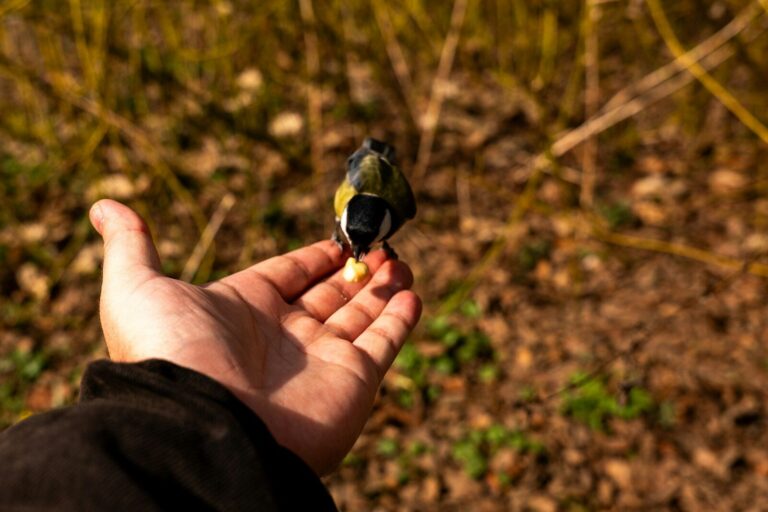
Toward the end of the first week, if the bird is eating well, showing curiosity about you, and beginning to approach the cage bars when you’re near, you can begin the taming and introduction process. Start by offering a favorite treat through the bars. Don’t try to reach into the cage yet. Let the bird come to you.
The pace from here depends entirely on the individual bird. A hand-raised, well-socialized young bird may be stepping onto your hand by the end of week two. An aviary-raised adult bird may take two to three months to reach that same point. Both are fine. Patience invested now produces a relationship built on trust rather than force, and a relationship built on trust is what determines whether you end up with a wonderful companion or a defensive, difficult bird.
Introducing to Other Birds
After quarantine and health clearance, the introduction to existing birds is a multi-stage process. Stage one: scent exchange without contact — swap toys and perches between cages, let the birds hear but not see each other initially. Stage two: visual contact without physical access — cages adjacent or a visual barrier between them that allows sight but not contact. Stage three: supervised time in a shared neutral space. Each stage should last until both birds are consistently calm before proceeding to the next. Rushed introductions that go badly can set inter-bird relationships in a negative direction that takes months to repair.
Species compatibility matters — not all birds should be housed together, and some combinations are genuinely dangerous. Research compatibility between your specific species before assuming they can share space. When in doubt, permanent separate cage housing with supervised shared time is a safe and manageable arrangement.