Budgerigar Care: The Complete Guide to Happy, Healthy Budgies
Budgerigars — budgies, parakeets — are the world’s third most popular pet after dogs and cats, and I think that popularity is entirely deserved. They’re intelligent, adaptable, entertaining, capable of genuine affection, and manageable for a committed beginner. I’ve worked with hundreds of budgies over the years, and I’m consistently impressed by how much personality fits into such a small bird. I’m also consistently dismayed by how often they’re kept in conditions that fail them entirely. Let’s get this right from the beginning.
Understanding the Budgie
Wild budgerigars live in large, mobile flocks across the arid grasslands of Australia. They spend their days foraging for grass seeds, flying considerable distances, and maintaining constant social contact with their flock through vocalization and proximity. This background explains nearly everything about what a captive budgie needs: social interaction, physical activity, mental engagement, and a sense of security. A budgie kept alone in a small cage with minimal interaction is not living a good life, regardless of how well its physical needs are technically met.
Housing: Size Is Not Optional
The cage marketed as a “budgie starter cage” at most pet stores is typically inadequate. A budgie needs enough horizontal space to fly — not just flutter — between perches. For a single bird, a cage of at least 18 inches wide by 18 inches deep by 24 inches tall is a minimum. Wider is more important than taller, because budgies fly horizontally. For two birds — and I strongly recommend keeping budgies in pairs — the cage should be substantially larger.
Bar spacing should be between half an inch and five-eighths of an inch. Avoid round cages, which provide no corner for security, and cages with purely horizontal bars, which encourage climbing rather than flight. Provide multiple perches of varying diameter and texture — natural wood branches are superior to uniform dowel perches, which cause foot problems over time. Include at least one natural wood branch, a rope perch, and a concrete perch for nail maintenance.
Position the cage in a room where people spend time, at roughly eye level or slightly above, against a wall (not in the center of a room, which feels exposed to a prey animal). Keep it out of the kitchen — cooking fumes, especially from non-stick cookware at high heat, release polytetrafluoroethylene (PTFE) fumes that kill birds rapidly. Keep it away from drafts and direct sustained sunlight.
Nutrition: Getting Beyond Seeds
The all-seed diet is the single most common nutritional mistake in budgie keeping. Seeds are high in fat and deficient in vitamins, minerals, and protein. A budgie fed exclusively on seed will develop nutritional deficiencies over time — vitamin A deficiency is particularly common and contributes to respiratory problems and reduced immune function. Seeds should make up no more than 30 to 40 percent of the diet.
The foundation of a good budgie diet is high-quality pellets — specifically formulated for small parrots. Pellets provide balanced nutrition that seeds don’t, and while many budgies initially resist the transition from seeds, most can be converted with patience. The approach: offer pellets in the morning before the seed dish is offered, so the bird is hungry when they encounter them. It takes days to weeks for most birds to accept pellets; don’t give up.
Fresh vegetables should be offered daily: dark leafy greens (kale, spinach, romaine), broccoli, carrots, sweet peppers, cucumber. Most budgies initially ignore fresh food — continue offering it consistently and many will eventually try it, especially if they see you eating it enthusiastically. Fresh fruit in small quantities as an occasional treat. Clean water, changed daily. Cuttlebone for calcium and beak conditioning.
Foods to avoid: avocado (toxic), chocolate, caffeine, alcohol, onion, garlic, fruit seeds and pits, and any heavily salted or processed human food.
Social Needs and Pair Keeping
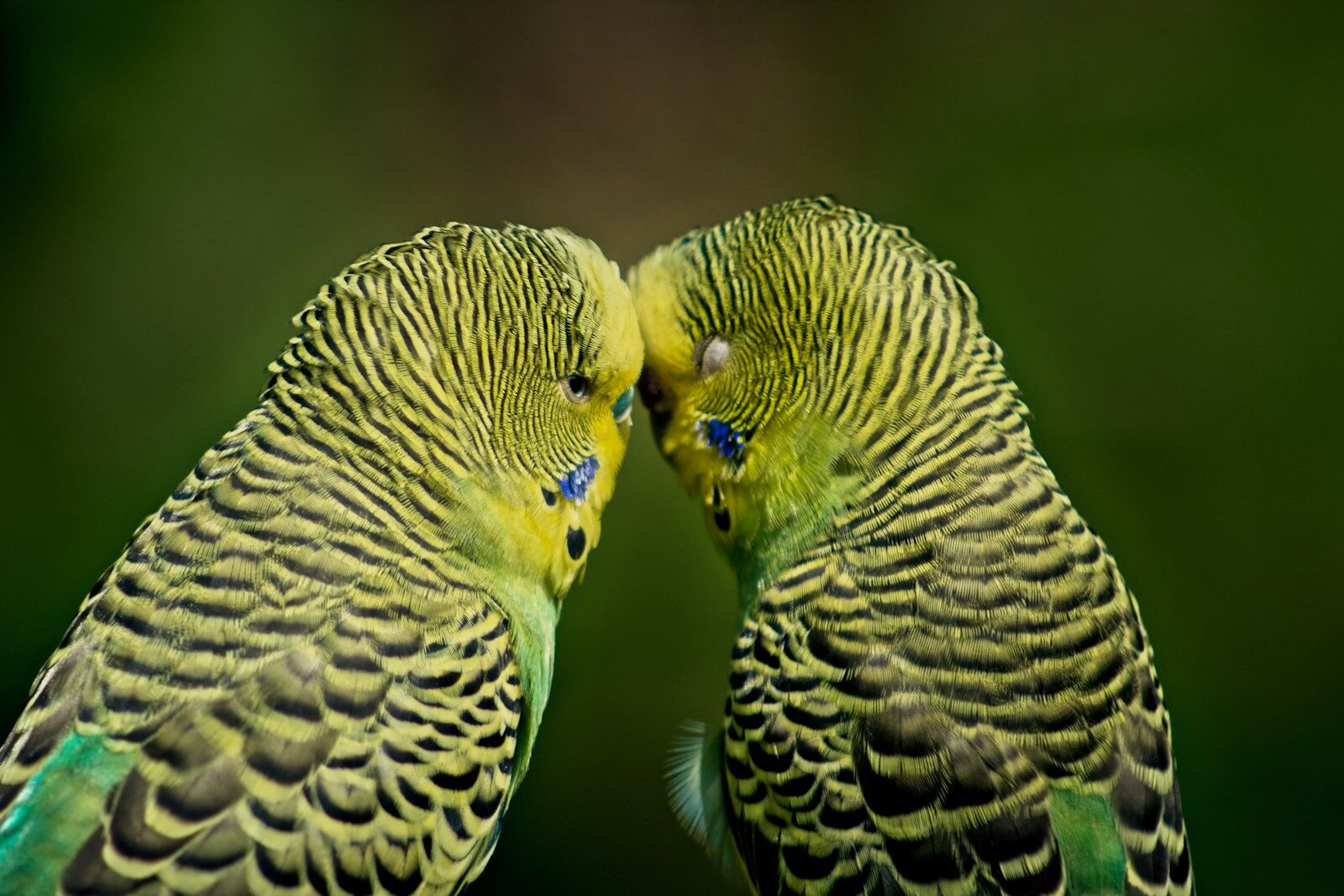
A single budgie kept without daily significant human interaction is a lonely animal. If you can provide 2-3 hours of genuine interaction and out-of-cage time daily, a single bird can thrive. If your lifestyle doesn’t support that, keep two budgies. Two budgies will entertain and socialize each other, reducing the burden on you while providing for the bird’s flock social needs.
The common concern — that two budgies will bond to each other and ignore the owner — is real but overstated. Two birds who receive consistent handling and interaction from their owner bond to both each other and their human family. The key is maintaining that consistent interaction; don’t assume a second bird makes human interaction unnecessary.
Taming and Handling
A hand-raised budgie from a breeder will step up onto your finger with minimal training. A parent-raised or aviary bird requires systematic taming. The process: move slowly, speak quietly, sit near the cage daily without attempting to handle, then begin offering millet spray through the bars so the bird comes close to your hand voluntarily, then gradually work toward the bird stepping onto a finger in the cage, then stepping up outside the cage.
Never grab or chase a bird. Never force interaction. These methods create fear associations that are difficult to undo and make the bird harder to handle for the rest of its life. Patience measured in weeks, not days, is what taming a nervous bird requires.
Health and Veterinary Care
Find an avian vet before you need one. Annual checkups for budgies are appropriate; twice yearly for birds over five. Know the signs of illness: puffed feathers outside of normal preening, sitting at the bottom of the cage, discharge from nostrils or eyes, changes in droppings, labored breathing, sudden behavior changes, or reduced eating. A budgie who looks sick is a budgie who has been sick for a while — their instinct to hide illness is strong. When in doubt, get to a vet today, not next week.
Common health issues include psittacosis (chlamydiosis), mites (particularly air sac mites), feather and beak deformities, tumors (lipomas are common in older budgies), and thyroid problems associated with iodine deficiency in seed-only diets. Baseline annual bloodwork catches issues early.
Lifespan and Long-Term Commitment
Well-cared-for budgies live 8 to 12 years, with some reaching 15. They are not a short commitment. Over that decade-plus, they will become genuinely integrated into your household, recognize family members, develop favorite toys and games, and communicate their moods and needs with surprising clarity. The investment you put into their care and socialization returns multiplied. A budgie who has been given what they need is one of the most delightful animals you can share a home with.